
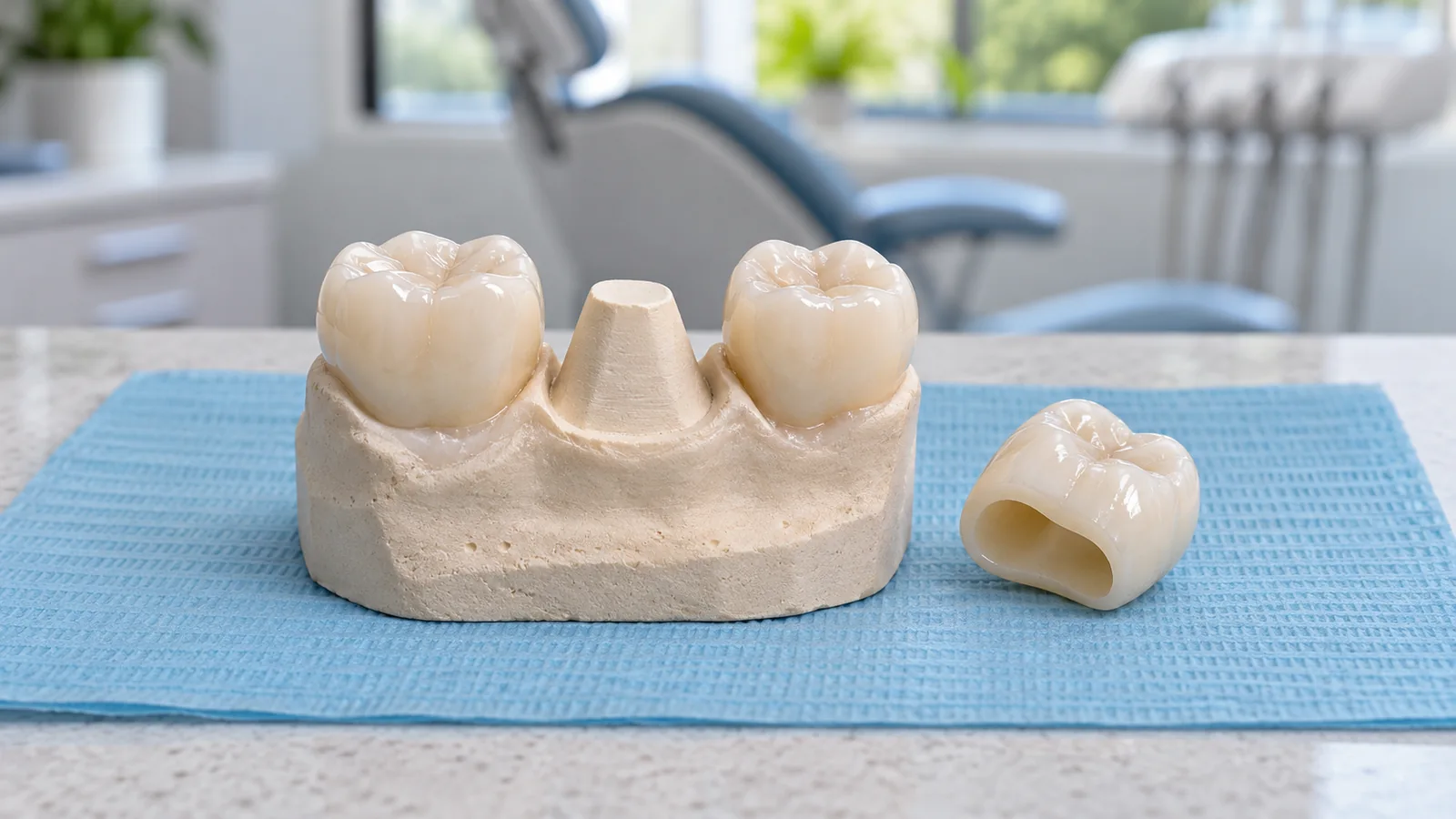
A crown that comes loose can sometimes be recemented, but the dentist needs to check both the crown and the tooth underneath. A damaged crown, decay or a fractured tooth may require a different repair or replacement.
CEREC technology can make a same-day crown possible in suitable cases. It does not mean every loose crown should be replaced, or that every tooth can be fully treated in one visit.
The first question is why the crown came loose
A crown is meant to fit over and protect a prepared tooth. When it loosens, the visible problem is only part of the picture.
The dentist may need to assess the crown’s fit, the remaining tooth, the bite and whether decay or a fracture is present. Your symptoms and dental history also help guide the examination.
Tell the office whether the crown:
- Came off completely or still moves on the tooth.
- Broke into pieces.
- Came away with a post or tooth fragment attached.
- Is temporary or permanent.
- Is supported by a natural tooth or an implant.
If you are unsure, describe what happened. You do not need to identify the cause before asking for help from a dentist in Dunnville.
When might the existing crown be reused?
Recementing may be an option when the crown remains suitable and the tooth provides an appropriate foundation. The dentist must assess the fit and condition before making that decision.
Bring the crown if you have it. Do not scrape its inside or use household glue to put it back. Avoid chewing on the affected area and call for instructions.
A crown that looks intact in your hand may still have a problem that prevents reuse. Equally, a crown coming off does not automatically mean you need a new one.
Ask, “Can this crown be reused, and what needs to be checked or treated first?” That keeps the discussion centred on the condition of the tooth and restoration.
When might replacement be needed?
A replacement may be discussed if the crown is damaged, no longer fits appropriately or cannot be reused after the underlying tooth is treated.
Sometimes the tooth needs more attention before any crown can be fitted. For example, a problem affecting the inside of the tooth or the supporting tissues may change the treatment sequence.
The dentist should explain:
- What was found during the assessment.
- Whether the existing crown is usable.
- What treatment the tooth needs first.
- Whether a temporary restoration is needed.
- Which replacement options are suitable.
The Canadian Dental Association’s crown guide explains how crowns restore damaged teeth and why some cases need additional treatment stages.
Where does a same-day CEREC crown fit in?
Dentistry Dunnville offers CEREC technology, which can be used to design and make certain restorations in the office.
For an appropriate case, a digital workflow may allow a crown to be made and placed during one visit. The assessment still comes first. The dentist needs to decide whether the tooth and proposed restoration suit that approach.
A useful way to frame the question is: “If this crown needs replacing, is a same-day restoration suitable for this tooth?”
That question is more useful than assuming the fastest option is the right one. The aim is an appropriate restoration with a suitable fit and bite, not simply finishing within a particular number of hours.
What could prevent treatment being completed that day?
The tooth may need other treatment first, more information may be required, or a different restoration may be recommended. The appointment time and available clinical resources also matter.
Even if the practice offers CEREC, an urgent assessment and a completed crown replacement are not automatically the same appointment.
When you call, ask:
- Is the first visit for assessment or possible treatment?
- What information should I bring?
- Could additional treatment change the plan?
- If the crown cannot be completed then, how will the tooth be protected?
- When and how will the final treatment be arranged?
Explain if you have travel, work or other scheduling constraints. The team can discuss what is possible after the clinical needs are understood.
What should I do until the appointment?
Keep a detached crown in a clean container and bring it with you. Avoid chewing on the exposed tooth or testing a loose crown by biting down.
Do not attempt to tighten a post or an implant component yourself. If the restoration is partly attached, call the office for instructions rather than pulling it off.
Contact a dental provider promptly if there is severe pain, swelling or bleeding. Difficulty breathing or swallowing, or rapidly spreading facial or neck swelling, requires emergency medical care.
For a loose crown without those symptoms, call the office for advice on timing. Do not set your own waiting period based only on the fact that it does not hurt.
Ask for a plan before comparing prices
The cost of recementing a suitable crown is a different question from the cost of treating the tooth and making a new restoration. Ask the dentist to explain what the estimate covers.
If the plan changes after examination, request an updated explanation of the treatment, fees and next appointments. Check insurance contributions separately; having coverage does not establish what a particular repair or replacement will cost you.
Useful questions are: “What do I need now?” and “What would complete the treatment?” The answers help distinguish temporary protection from the final restoration.
Questions about loose crowns
Does a loose crown mean the tooth cannot be saved?
No. The dentist needs to assess the remaining tooth before discussing repair, replacement or other treatment. A detached crown alone does not establish the outlook.
Can an old crown be reused?
Age is only one part of its history. Condition, fit and the tooth underneath determine whether reuse is reasonable.
Can I request CEREC when I book?
Yes. Tell the team you want to discuss it, while understanding that suitability and scheduling must be confirmed.
Is a crown on an implant handled the same way?
No. Implant restorations involve different components. Tell the office if the loose crown is implant-supported so they can plan the assessment.
Have the crown assessed at Dentistry Dunnville
Contact Dentistry Dunnville to describe the loose or broken crown and request an appointment. Bring the crown and relevant records if you have them.
The first step is to find out whether the existing restoration can be reused and what the tooth needs. If replacement is appropriate, you can then discuss whether CEREC fits your treatment plan.

0 Comments