
Noticing a little blood when you brush or floss can feel alarming. But before you panic, it helps to know one thing: bleeding gums are one of the most common things dentists see, and in many cases, the cause is straightforward and very treatable.
That said, bleeding gums are never something to ignore. They are your mouth’s way of flagging that something needs attention, whether that is a change in your brushing technique or the early stages of gum disease.
This guide walks you through the most common reasons gums bleed, what the signs mean, and when it is time to book an assessment in Dunnville.
The short answer: Occasional bleeding that clears up within one to two weeks of improving your home care is usually not serious. Bleeding that keeps coming back, spreads to multiple areas, or comes with swelling or bad breath deserves a dental check.
Key takeaways:
- Bleeding gums have a range of causes, from minor irritation to early gum disease
- Most cases are treatable, especially when caught early
- Home care helps, but has limits once tartar or inflammation sets in
- A gum health assessment is the clearest way to know what is actually going on
Why gums bleed: the most common reasons
Not all bleeding means the same thing. The cause matters a lot when it comes to figuring out what to do next.
You just started flossing again
This is probably the most common scenario. If you have not flossed regularly in a while, the gum tissue between your teeth can be tender and inflamed. When you start cleaning those areas properly, a little bleeding is normal at first.
According to the Canadian Dental Association, some bleeding can happen when you first start flossing again. But if it keeps happening almost every time you brush or floss, it is time to see your dentist.
With consistent, gentle cleaning, this type of bleeding usually settles within one to two weeks.
You are brushing too hard
More pressure does not mean cleaner teeth. Scrubbing with a firm-bristled brush or pressing too hard can irritate the gum edge and cause it to bleed. Switch to a soft-bristled brush, use light circular motions, and angle the bristles gently toward the gumline.
Plaque buildup along the gumline
When plaque is not removed regularly, it irritates the gum tissue. The gums become inflamed and are more likely to bleed when touched. This is the earliest stage of gum disease, called gingivitis, and it is reversible with professional cleaning and improved home care.
Medication side effects
Some medications, including blood thinners and certain blood pressure drugs, can make gums bleed more easily. If you have recently started a new medication and noticed a change in your gums, mention it at your next dental visit.
Hormonal changes
Pregnancy, puberty, and hormonal fluctuations can make gum tissue more sensitive to plaque. Pregnant patients in particular are encouraged to keep up with their dental cleanings, as gum sensitivity can increase during this time.
When bleeding gums become a warning sign
Temporary bleeding with a clear cause is one thing. The pattern that deserves closer attention is bleeding that keeps returning, does not improve with better home care, or comes alongside other changes in your gums.
The Canadian Dental Association notes that gum disease is one of the main reasons adults lose teeth, but the good news is that it can almost always be prevented, and in its early stages, it can be reversed.
Here is a simple way to read the signs:
| What you are noticing | What it may mean | What to do |
|---|---|---|
| Bleeding that started with flossing, settles in 1-2 weeks | Normal irritation | Keep up gentle home care |
| Bleeding that keeps coming back after brushing or flossing | Possible gingivitis | Book a dental check |
| Red, puffy, or tender gums | Gum inflammation | Book a dental check |
| Bad breath that will not go away | Possible gum disease | Book a dental check |
| Gums pulling away from teeth | Possible periodontitis | Book soon |
| Teeth feeling loose or your bite shifting | More advanced gum disease | Book soon |
| Painful swelling or pus near a tooth | Possible abscess or infection | Call the same day |
The key rule: healthy gums do not bleed regularly. If yours do, something is worth checking, even if there is no pain.
Not sure if yours is serious? A quick gum check at Dentistry Dunnville can tell you exactly what is going on. Request an appointment or call 289-217-6237.
Gingivitis vs. periodontitis: what is the difference?
Gingivitis is the early, reversible stage of gum disease. The gums are inflamed and may bleed, but the supporting bone and tissue around the teeth are not yet affected. A professional cleaning and better home care can often resolve it.
Periodontitis is what happens when gingivitis is left untreated. The infection moves deeper, affecting the tissue and bone that hold your teeth in place. At this stage, the condition cannot be fully reversed, but it can be managed and stabilized with proper periodontal therapy.
This is exactly why catching bleeding gums early matters so much.
What you can do at home
Good home care is the foundation of gum health. It will not replace a professional assessment if your gums are already inflamed, but it is the most important thing you can do between visits.
A few habits that make a real difference:
- Brush twice a day with a soft-bristled toothbrush. Angle the bristles gently toward the gumline and use small, circular motions rather than scrubbing back and forth.
- Floss or use an interdental cleaner every day. If your gums bleed when you start, keep going gently. Consistent cleaning is usually what stops the bleeding, not avoiding the area.
- Do not press harder if your gums bleed. More pressure irritates the tissue further. Gentle and consistent beats firm and occasional.
- Rinse with water after meals if you cannot brush right away. It helps clear food debris from around the gumline.
- Watch for patterns. If bleeding settles within a week or two of improving your routine, that is a good sign. If it keeps coming back or spreads to new areas, that is your cue to book a check.
Important: home care has limits. Once plaque hardens into tartar, brushing and flossing cannot remove it. A professional dental cleaning is the only way to clear tartar buildup and give your gums a proper reset.
What happens at a gum health assessment
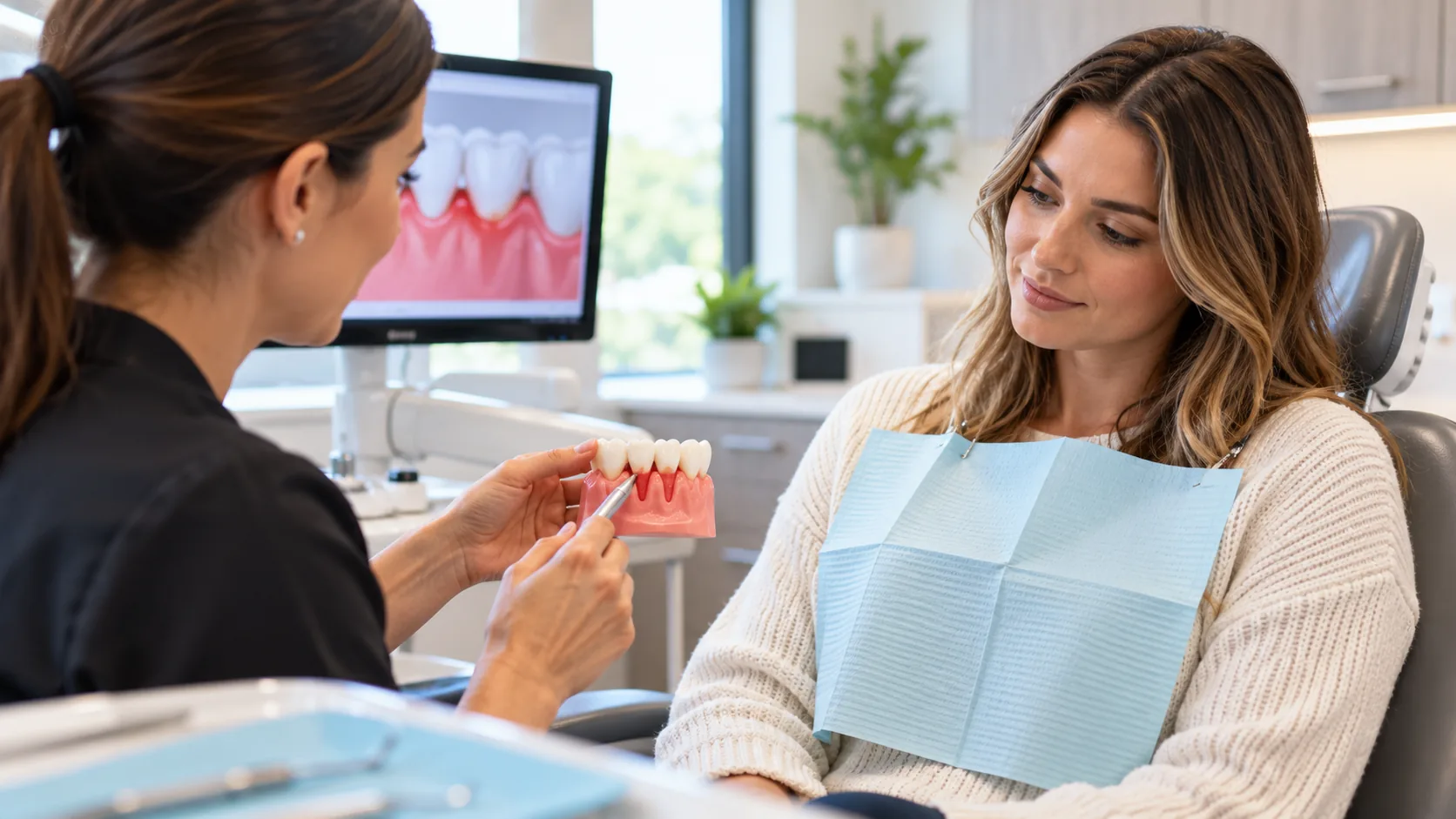
If your gums have been bleeding regularly, a dental assessment is the clearest way to find out whether it is simple irritation, early gingivitis, or something that needs more targeted care. You will leave knowing exactly what is going on and what, if anything, needs to happen next.
At Dentistry Dunnville, a gum check is straightforward. The dentist or hygienist will:
- Look at the colour, texture, and condition of your gum tissue
- Measure gum pocket depths around your teeth to check for signs of inflammation or disease
- Check for tartar buildup, especially below the gumline where home care cannot reach
- Review your home care habits and flag anything worth adjusting
- Recommend the right next step, whether that is a routine cleaning, a more targeted periodontal therapy appointment, or simply improved technique at home
You do not need to arrive with a diagnosis or know what the problem is. Just share what you have noticed, and the team will take it from there. Most gum concerns are easier to address than people expect, especially when they are caught early.
A dental exam that includes a gum check is also one of the best ways to catch problems before they become harder to treat. Gum disease rarely causes pain in its early stages, which is exactly why regular check-ins matter.
Questions patients in Dunnville actually ask about bleeding gums
My gums only bleed sometimes. Does that still count as a problem?
Yes. Healthy gums do not bleed, even occasionally. Intermittent bleeding usually means there is enough plaque irritation at the gumline to cause inflammation, even if it is not happening every single time you brush. If it comes and goes, that pattern is worth a quick check.
I started flossing again and now my gums bleed every day. Should I stop?
No. Keep going, but be gentle. When you restart flossing after a break, the gum tissue between your teeth is often tender and inflamed from the plaque buildup. A little bleeding is normal at first. If it settles within one to two weeks, you are on the right track. If it keeps happening past that point, book a dental check.
What is the difference between gingivitis and gum disease?
Gingivitis is the earliest, reversible stage of gum disease. The gums are inflamed and may bleed, but the bone and tissue supporting your teeth are not yet affected. Left untreated, gingivitis can progress to periodontitis, where the infection moves deeper and causes damage that cannot be fully reversed. Catching it at the gingivitis stage makes a significant difference.
Can bleeding gums go away on their own without seeing a dentist?
Sometimes, if the cause is minor irritation from brushing technique or a recent return to flossing. Better home care can resolve that. But if there is tartar buildup along the gumline, no amount of brushing will remove it. Only a professional cleaning can clear tartar, and without that, the inflammation and bleeding will keep coming back.
I do not have any pain. Does that mean my gums are fine?
Not necessarily. Gum disease is often painless in its early stages, which is one of the reasons it tends to go unnoticed until it is more advanced. Bleeding, redness, or puffiness without pain is still a sign worth acting on. A gum check is the only way to know for certain what is happening below the gumline.
Ready to get your gums checked in Dunnville?
If your gums bleed regularly, feel tender, or you have noticed any of the signs in this guide, it is worth getting a proper look. Most gum concerns are easier to address than people expect, especially when they are caught early.
At Dentistry Dunnville, we will check your gum health, explain what we find in plain language, and help you understand what your next step looks like, whether that is a routine cleaning or something more targeted.
You do not need to have it figured out before you call. That is what the appointment is for.
- Call us: 289-217-6237
- Find us: 105 Lock Street E, Dunnville, ON
- Book online: Request an appointment

0 Comments