
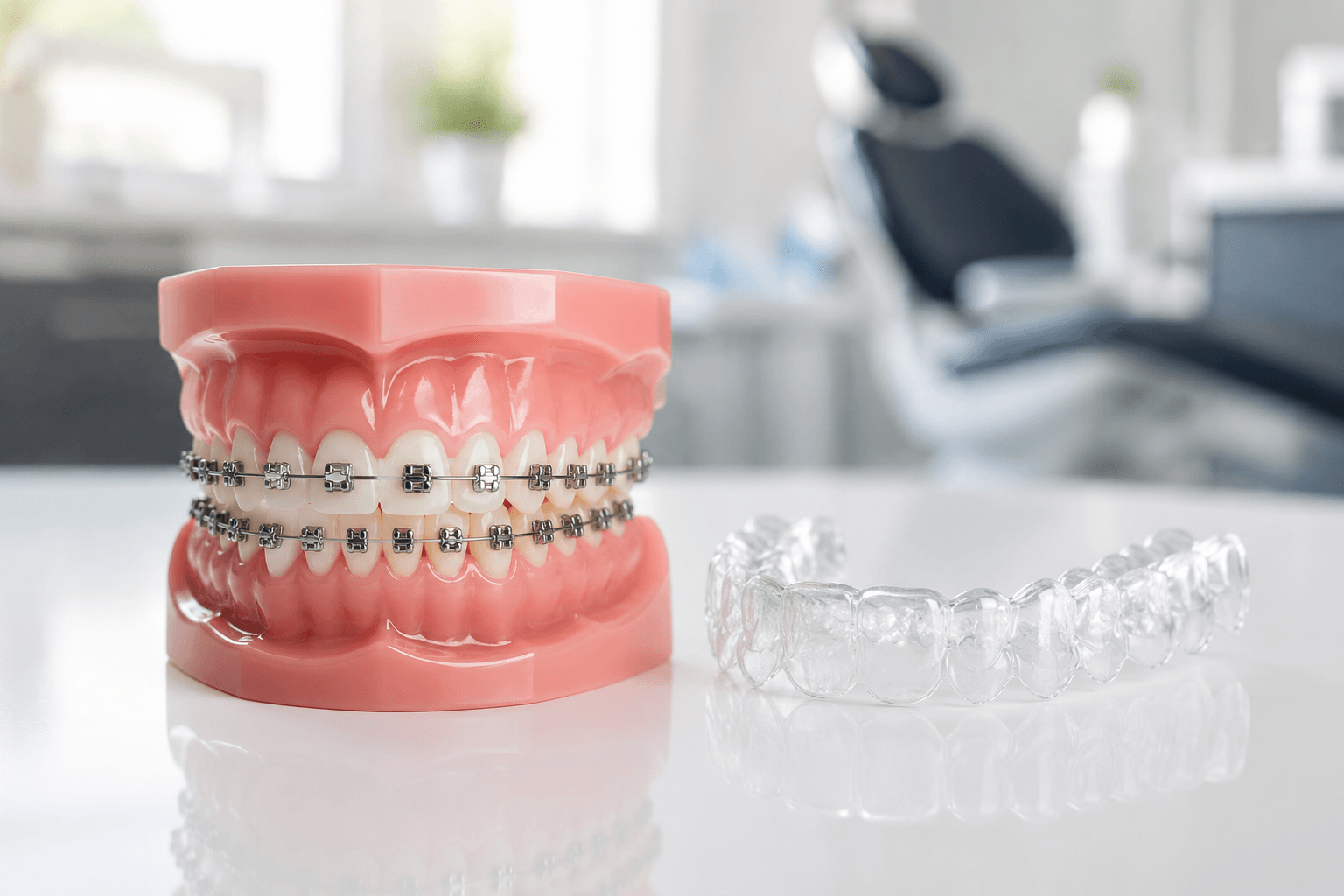
Braces and clear aligners can both help straighten teeth, but the right choice depends on more than appearance. Your bite, the amount of crowding or spacing, your oral health, the tooth movements required, and your ability to follow the treatment routine can all influence which option may be appropriate.
Some patients like the removability of clear aligners, while others prefer an option that stays in place throughout treatment. Neither approach is automatically better for everyone. Before choosing between braces and clear aligners in Dunnville, it’s helpful to understand how they work and arrange an assessment of your teeth, gums, and bite.
Why Compare Braces and Clear Aligners?
People often compare braces and clear aligners because both are used to improve tooth alignment, but they can affect daily life in different ways.
Appearance is usually one of the first considerations. Traditional braces use brackets and wires that remain visible on the teeth. Clear aligners are designed to be less noticeable, although they shouldn’t be described as completely invisible.
Daily habits matter too. Since aligners can be removed, patients need to remember to wear them as instructed and put them back in after eating or cleaning their teeth. Braces stay attached, so there’s no need to remember to insert them. However, cleaning around the brackets and wires requires additional care.
The clinical side of the decision is equally important. Different alignment and bite concerns may require different types of tooth movement. A dentist must examine your mouth before explaining which orthodontic options may be suitable.
How Braces May Help Straighten Teeth
Braces use brackets attached to the teeth and a wire that connects them. The system applies controlled pressure to guide teeth into new positions over time. Adjustments are made during follow-up appointments according to the treatment plan.
Because braces remain in place, they continue working without relying on the patient to insert or remove an appliance each day. This can be useful for someone who is concerned about remembering to wear removable trays consistently.
Braces may be discussed for several types of crowding, spacing, or bite concerns. Suitability depends on the individual case, including the position of the teeth, the health of the gums and supporting bone, and the movements required.
Wearing braces also changes parts of a patient’s routine. Food can become trapped around brackets and wires, so careful brushing and cleaning between the teeth are especially important. Patients may also be advised to avoid certain hard, sticky, or chewy foods that could damage the appliance.
Braces aren’t one standard treatment used in exactly the same way for everyone. The specific system, treatment plan, follow-up needs, and expected timeline should be discussed after an assessment.
How Clear Aligners May Help Straighten Teeth
Clear aligners use a planned series of removable trays. Each tray is shaped to support gradual tooth movement, and patients typically move through the series according to instructions from their dental provider.
Dentistry Dunnville offers Sure Smile Aligners as one option that may be considered for patients interested in clear aligner treatment. An assessment is still needed to determine whether aligners can address a person’s specific alignment or bite concerns.
The trays can be removed for eating, drinking beverages other than water, brushing, and flossing. This can make it easier to clean the teeth without having to work around attached brackets. It also means the patient is responsible for wearing the aligners as directed. Frequently leaving them out may interfere with the treatment plan.
Patients need to keep both their teeth and trays clean. Putting an aligner over teeth that haven’t been brushed after eating can trap food and plaque against the tooth surfaces. The trays also need to be stored safely when they’re removed so they aren’t lost, damaged, or accidentally thrown away.
Clear aligners may appeal to people who want a less noticeable appliance or more flexibility while eating. They aren’t suitable for every patient or every type of tooth movement, though. Their removability is only an advantage if the patient is comfortable following the recommended wear routine.
Braces vs. Clear Aligners: Key Differences to Consider
The most useful comparison is based on how each option would work for your mouth and routine. Key differences can include:
- Appearance: Brackets and wires are visible on the teeth. Clear aligners are generally less noticeable but may still be seen, particularly at close range.
- Removability: Braces stay attached throughout treatment. Aligners can be removed for eating and oral hygiene, but they must be worn according to the recommended schedule.
- Eating: Patients with braces may need to avoid foods that could bend wires or loosen brackets. Aligner users remove their trays before eating and clean their teeth before putting them back in.
- Oral hygiene: Aligners allow patients to brush and floss without working around an attached appliance. Braces require more detailed cleaning around the brackets, wires, and gumline.
- Responsibility: Braces don’t depend on remembering to put them back in. Clear aligners require consistent wear and careful storage.
- Treatment needs: Some tooth movements or bite concerns may be better managed with one approach than another. This can only be determined through an assessment.
- Follow-up care: Both options require monitoring. The exact appointment schedule and treatment steps depend on the plan recommended by the dental provider.
Comfort can vary with either approach. Braces may cause temporary irritation from brackets or wires, while aligners may feel snug when a new tray is introduced. Individual experiences differ, so neither option should be presented as universally more comfortable.
When Fast Braces or Sure Smile Aligners May Be Discussed
Dentistry Dunnville may discuss different treatment approaches based on the patient’s needs.
Fast Braces may be considered when discussing braces options for an adult patient. Despite the name, treatment speed shouldn’t be assumed or guaranteed. The timeline depends on the starting position of the teeth, the type and extent of movement required, the patient’s oral health, and how the treatment progresses.
Sure Smile Aligners may be discussed with patients interested in a removable and less noticeable option. They may work for certain alignment concerns, but the dentist must first determine whether aligners can provide the required movements.
The choice isn’t simply between a “fast” option and a “convenient” one. Each system has its own requirements and limitations. A recommendation should be based on clinical findings as well as the patient’s goals and ability to manage the daily routine.
In some situations, a dentist may explain that one option is more appropriate than the other. In others, more than one treatment path may be available. Asking why an option has been recommended can help you understand the reasoning behind the plan.
Questions to Ask Before Choosing an Option
An orthodontic consultation is a chance to understand both the clinical recommendation and what treatment may involve in everyday life. Consider asking:
- What kind of tooth movement do I need?
- Are there crowding, spacing, or bite concerns that affect my options?
- Could braces and clear aligners both address my needs?
- Would removable aligners realistically fit my routine?
- How will I need to clean my teeth and appliance?
- Are there foods or habits I would need to change?
- How often will my progress need to be checked?
- What should I do if I lose an aligner or damage part of my braces?
- What factors could change the treatment plan or timeline?
- What type of retention may be needed afterward?
It’s also worth discussing your priorities. If appearance, eating habits, travel, sports, work, or remembering daily routines could affect your experience, tell the dentist. These practical details can help shape a more suitable recommendation.
Frequently Asked Questions About Braces and Clear Aligners in Dunnville
Are braces or clear aligners better?
Neither is automatically better. Braces and clear aligners work differently, and the most appropriate option depends on the patient’s teeth, bite, oral health, goals, and treatment needs.
A person who prefers removable trays may still require tooth movements that are better addressed through another approach. Someone who initially expects to need braces may learn that aligners can be discussed. An assessment is needed before making that decision.
Can adults get braces or clear aligners?
Adults may be considered for braces or clear aligners. Age alone doesn’t determine suitability. The dentist may evaluate the teeth, bite, gums, bone support, existing dental work, and overall treatment goals.
Any active oral-health concerns may need to be addressed before orthodontic treatment begins. The recommended approach will depend on the findings from the examination.
Are clear aligners always an option?
No. Clear aligners may not be appropriate for every type of tooth movement or bite concern. They also require patients to follow the prescribed wear routine and care for the trays properly.
A dentist can assess whether aligners may address your needs or whether braces or another treatment approach should be discussed.
Do braces work faster than clear aligners?
There’s no single answer that applies to every patient. Treatment time can vary based on the starting position of the teeth, the complexity of the bite, the movements required, the treatment system, and how closely the treatment plan is followed.
Names or general descriptions shouldn’t be treated as guaranteed timelines. Your dental provider can explain the factors that may affect your case, but treatment can progress differently from one person to another.
How do I know which option is right for me?
Start with a dental assessment. The dentist can examine your teeth, gums, and bite, discuss your goals, and identify the movements that may be needed. You can then compare the suitable options based on their clinical requirements and how well each routine fits your lifestyle.
Talk to Dentistry Dunnville About Braces and Clear Aligner Options
Choosing between braces and clear aligners requires a closer look at your oral health, bite, goals, and daily habits. Learning about the differences is a useful starting point, but an individual assessment provides the information needed to discuss suitable options.
If you’re considering braces or clear aligners in Dunnville, contact Dentistry Dunnville to ask about an assessment. The dental team can review your concerns and explain which treatment paths may be considered based on your needs.

0 Comments