
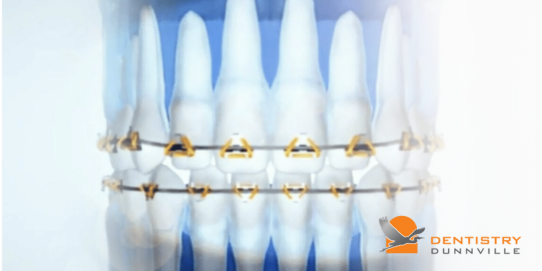
You did it. Your FastBraces® treatment is complete, your teeth are straight, and your smile looks better than it ever has. It is a great feeling. But here is something your dentist in Dunnville wants you to know before you celebrate too hard: the work is not quite finished yet.
The period after your braces come off is just as important as the treatment itself. Without the right follow-through, teeth can shift back toward their original positions. This is not a flaw in your treatment. It is simply how teeth behave. The good news is that with a solid retention plan, your results can last a lifetime.
Why Teeth Move After Orthodontic Treatment
To understand retention, it helps to understand why shifting happens in the first place.
Your teeth are held in place by a structure called the periodontal ligament. This is a soft tissue that connects each tooth root to the surrounding bone. During orthodontic treatment, this ligament stretches and adjusts as your teeth move into new positions. When the braces come off, that ligament has a memory. It wants to return to where it was comfortable.
This tendency is called orthodontic relapse, and it is completely normal. It does not mean your treatment failed. It simply means your teeth need time and support to fully settle into their new alignment. That support comes from your retainer.
Your Retainer: The Most Important Thing You Will Wear After FastBraces
A retainer holds your teeth in their corrected positions while the bone and surrounding tissue adapt and stabilize. Think of it as the final phase of your orthodontic treatment, not a separate step.
There are two main types your dentist in Dunnville may recommend.
Removable retainers These are custom-fitted appliances you wear over your teeth. Most patients start by wearing them full-time (except when eating or brushing) and gradually transition to nights only. The most common styles are clear plastic retainers, which are nearly invisible, and Hawley retainers, which use a wire across the front teeth with an acrylic base.
Fixed (bonded) retainers A fixed retainer is a thin wire bonded to the back surface of your front teeth. You cannot remove it yourself, and it works continuously without you having to think about it. It is a popular option for patients who are concerned about remembering to wear a removable retainer consistently.
Some patients end up with a combination of both. Your dental team will recommend the best approach based on the specifics of your treatment and your lifestyle.
How Long Do You Need to Wear a Retainer?
This is one of the most common questions patients ask after completing FastBraces treatment, and the honest answer is: for a very long time, possibly always.
In the first several months after treatment, your bone is still remodelling around the new tooth positions. This is the highest-risk period for relapse, so consistent retainer wear during this time is critical.
After that initial phase, many patients move to wearing their retainer only at night. Most dental professionals recommend continuing nightly wear indefinitely, or at minimum for several years. Teeth naturally shift with age regardless of whether you have had orthodontic treatment. A retainer helps manage that.
The patients who tend to see the most stable long-term results are the ones who treat their retainer as a permanent part of their routine rather than something to phase out as soon as possible.
Taking Care of Your Retainer
A retainer only works if it fits properly and stays clean. Here are the basics.
For removable retainers, rinse with cool water every time you take it out. Clean it gently with a soft toothbrush and mild soap. Avoid hot water, which can warp the plastic. Store it in its case when you are not wearing it. Never wrap it in a napkin or leave it on a table where it can be lost or damaged.
For bonded retainers, flossing requires a bit more effort. A floss threader or water flosser helps you clean beneath the wire. Keeping that area clean is important because plaque can build up around the bonded wire if it is not addressed regularly.
If your retainer cracks, warps, or no longer fits correctly, contact your dentist in Dunnville right away. A retainer that does not fit is not doing its job, and teeth can shift quickly when retention is interrupted.
What Your Follow-Up Appointments Look Like with a Dentist in Dunnville
Completing FastBraces does not mean your relationship with your dental team is over. Regular follow-up appointments allow your dentist to check that your teeth are holding their position, confirm your retainer still fits well, and catch any early signs of shifting before they become a bigger issue.
At Dunnville Dentistry, we build this follow-up care into your treatment plan. We want to see your results last, and monitoring your retention is part of how we make sure that happens.
These visits also give you a chance to ask questions. Many patients have concerns in the months after treatment: Is this normal? Is my tooth moving? Should my retainer feel different? There is no such thing as a minor concern when it comes to protecting your investment.
Signs Your Teeth May Be Shifting
Even with a retainer, it is worth knowing what to watch for. Contact your dentist in Dunnville if you notice any of the following.
- Your retainer feels tighter than usual after not wearing it for a day or two
- You can see visible changes in tooth alignment
- Your bite feels different or uncomfortable
- Your retainer no longer sits flush against your teeth
Catching early movement quickly gives your dental team the best chance of correcting it with minimal intervention. Waiting can mean more significant treatment down the road.
FastBraces® Gave You a Head Start – Retention Protects It
One of the things patients appreciate most about FastBraces is how efficiently it moves teeth. The technology works on the crown and root simultaneously, which is part of why treatment times are often significantly shorter than with traditional braces. According to FastBraces Technologies, many patients complete treatment in as little as three months to about a year, compared to the two or more years often associated with conventional orthodontics.
That efficiency is a real advantage. But the biological reality of tooth movement applies to every orthodontic system. The retention phase is not unique to FastBraces. It is simply a universal part of how orthodontics works.
Your Smile Is Worth Protecting with a Dentist in Dunnville
If you have recently completed FastBraces® treatment at Dunnville Dentistry, you are in the best possible position. Your teeth are straight, your bite is aligned, and you have a dental team in Dunnville that knows your case well.
The next step is simply staying consistent. Wear your retainer as directed. Keep your follow-up appointments. Reach out if anything feels off.
We are here to support your smile long after the braces come off. Call us at 905-774-7608 or visit us at 105 Locke Street E, Dunnville, ON to book your post-treatment follow-up or ask any questions about your retention plan.

0 Comments