
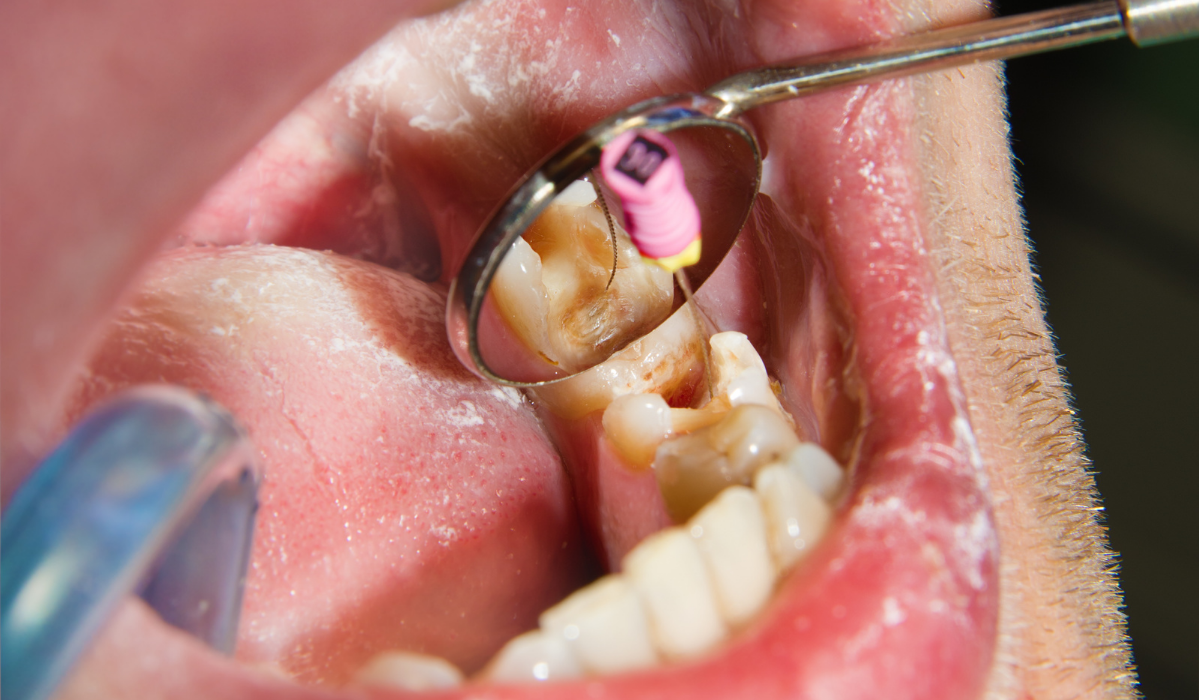
The words root canal tend to make people nervous. But understanding what actually happens during the procedure goes a long way toward easing that anxiety. One of the most important and least talked about steps is access preparation. This is how your dentist creates a precise opening in the tooth to reach the infected pulp inside.
At Dunnville Dentistry, we believe informed patients are more comfortable patients. This guide explains what root canal access preparation involves, how the technique differs depending on which tooth is being treated, and why getting this step right sets the tone for the entire procedure.
What Is Root Canal Access Preparation?
Before any cleaning or shaping can begin, your dentist needs a clear path into the interior of the tooth. Access preparation creates that entry point.
The pulp sits in a central chamber at the core of every tooth. Narrow canals extend down through each root. These spaces contain nerves, blood vessels, and connective tissue. When infection develops inside the tooth, a root canal removes the affected tissue, cleans the canals, and seals everything to prevent reinfection.
None of that is possible without a well-placed access cavity. Think of it as a doorway into the tooth. The size, shape, and location of that doorway must be precise. Too small and the dentist cannot reach all the canals. Too large and the tooth loses structural integrity.
How the Dentist Creates the Access Hole
Preparing the Tooth
Creating a root canal access cavity is a careful, deliberate process. It starts with local anaesthesia to keep the patient completely comfortable. Once the area is numb, the dentist places a rubber dam around the tooth. This small sheet isolates the tooth from the rest of the mouth, keeps the area dry, and protects the patient from debris and irrigating solutions.
Opening the Pulp Chamber
With the tooth isolated, the dentist uses a dental drill to remove the outer tooth structure. The goal is to cut through the enamel and dentine to expose the pulp chamber beneath. Specialised dental burs handle this stage, chosen based on the size and anatomy of the tooth.
The dentist then removes the roof of the pulp chamber. This step is called deroofing. Once the roof comes off, the pulp chamber opens fully and the canal entrances become visible.
Refining the Access Cavity
Irrigation with an antimicrobial solution begins right away to reduce bacteria inside the tooth. The dentist refines the access cavity as needed to ensure every canal entrance is clearly visible and reachable with treatment instruments.
Access Preparation for Front Teeth
Front teeth (incisors and canines) typically have a single root with one canal. The pulp chamber in these teeth is narrow and elongated. Because of this, the dentist creates the access cavity on the back surface of the tooth rather than on the biting surface.
The opening is usually oval or triangular in shape. This matches the natural outline of the pulp chamber in front teeth. The dentist drills inward at a slight angle, following the tooth’s natural anatomy to reach the canal without removing excess structure.
Visibility is one of the key challenges here. The dentist works from the back of the tooth and relies on dental X-rays taken before and during the procedure to guide the approach. A well-placed access cavity on a front tooth preserves as much natural structure as possible. This matters for long-term strength, since front teeth take on significant forces during biting.
Access Preparation for Back Teeth
Why Back Teeth Are More Complex
Back teeth (premolars and molars) present a greater challenge. These teeth are larger, have multiple roots, and often contain two, three, or even four separate canals. The dentist creates the access cavity on the biting surface of the tooth. The opening is larger than what a front tooth requires, reflecting the greater number of canals involved.
Locating Every Canal
Upper molars commonly have three roots with three or four canals. Lower molars typically have two roots and two to four canals. Canals in back teeth can be curved, narrow, or difficult to locate without careful preparation.
The dentist uses pre-treatment X-rays and knowledge of dental anatomy to anticipate where the canals are. Once the pulp chamber opens, the dentist identifies each canal orifice using a dental explorer and good lighting. Many practices use magnification tools such as loupes or a dental operating microscope to improve visibility.
Missing even one canal during a root canal procedure can cause treatment to fail. Thorough access preparation on back teeth makes it possible to locate and treat every canal present.
Why Proper Access Preparation Matters
A well-designed access cavity gives the dentist a straight-line path into each canal. This makes it easier to insert fine cleaning instruments, reduces the risk of those instruments binding or breaking, and allows irrigating solutions to reach all areas of the canal system.
Poor access preparation creates the opposite conditions. Canals that are not fully visible are easy to miss. Instruments forced into poorly aligned cavities are more likely to separate. Incomplete cleaning leaves bacteria behind, which raises the risk of reinfection and treatment failure.
At Dunnville Dentistry in Dunnville, every root canal procedure starts with careful planning and a thorough access preparation stage. Getting this step right protects both the tooth and the patient’s long-term oral health.
The Role of X-Rays in Access Preparation
Before Treatment Begins
Dental X-rays are essential throughout the root canal process. Before any drilling begins, the dentist reviews images to assess the number of roots, the estimated canal length, the degree of root curvature, and any unusual anatomical features.
During the Procedure
The dentist may take additional X-rays during access preparation to confirm the angle and depth of the cavity. These images provide real-time guidance and reduce the risk of procedural errors.
In some cases, cone beam computed tomography (CBCT) imaging provides more detail than standard X-rays. This three-dimensional imaging gives a clearer picture of complex root anatomy, particularly for back teeth with multiple curved canals.
What Patients Can Expect During This Stage
Access preparation takes place under local anaesthesia. Patients should not feel pain during the procedure. Some pressure and vibration from the drill is normal. If you feel anything beyond pressure at any point during the root canal, let your dentist know right away. The anaesthesia can be topped up quickly.
This stage typically takes between 15 and 30 minutes, depending on the complexity of the tooth. Once it is complete, the dentist moves into the cleaning and shaping phase. Fine instruments remove the infected pulp tissue and prepare the canals for sealing.
After the root canal is finished, the dentist fills the access cavity and typically restores the tooth with a crown. Your team at Dunnville Dentistry will walk you through every stage before treatment begins.
Frequently Asked Questions About Root Canal Access Preparation
Is access preparation the most painful part of a root canal? No. Local anaesthesia keeps the procedure comfortable. Most patients find the anaesthesia injection the most noticeable part. Once the area is fully numb, the access preparation and the rest of the root canal are very manageable.
Can a dentist miss a canal during access preparation? Yes, particularly in teeth with complex anatomy. This is why good lighting, magnification, and careful use of X-rays all matter. Missing a canal is a leading cause of root canal treatment failure.
How do I know if I need a root canal? Common signs include persistent toothache, lingering sensitivity to heat or cold, tooth discolouration, swelling near the tooth, or a recurring pimple on the gum. A dental examination and X-rays confirm the diagnosis.
Will my tooth look different after the access cavity is filled? In most cases, a crown restores the tooth after root canal treatment. Your dentist will discuss the best restoration option for your specific situation.
How long does a full root canal procedure take? A straightforward single-canal root canal typically takes 60 to 90 minutes in one appointment. Multi-canal teeth or complex cases may need two appointments. Your dental team will give you a clear estimate after your initial assessment.
If you are experiencing tooth pain or have been told you may need a root canal, do not wait. Early treatment leads to better outcomes and less discomfort. Contact Dunnville Dentistry at 905-774-7608 or visit us at 105 Locke Street E, Dunnville, ON to book your appointment.

0 Comments