
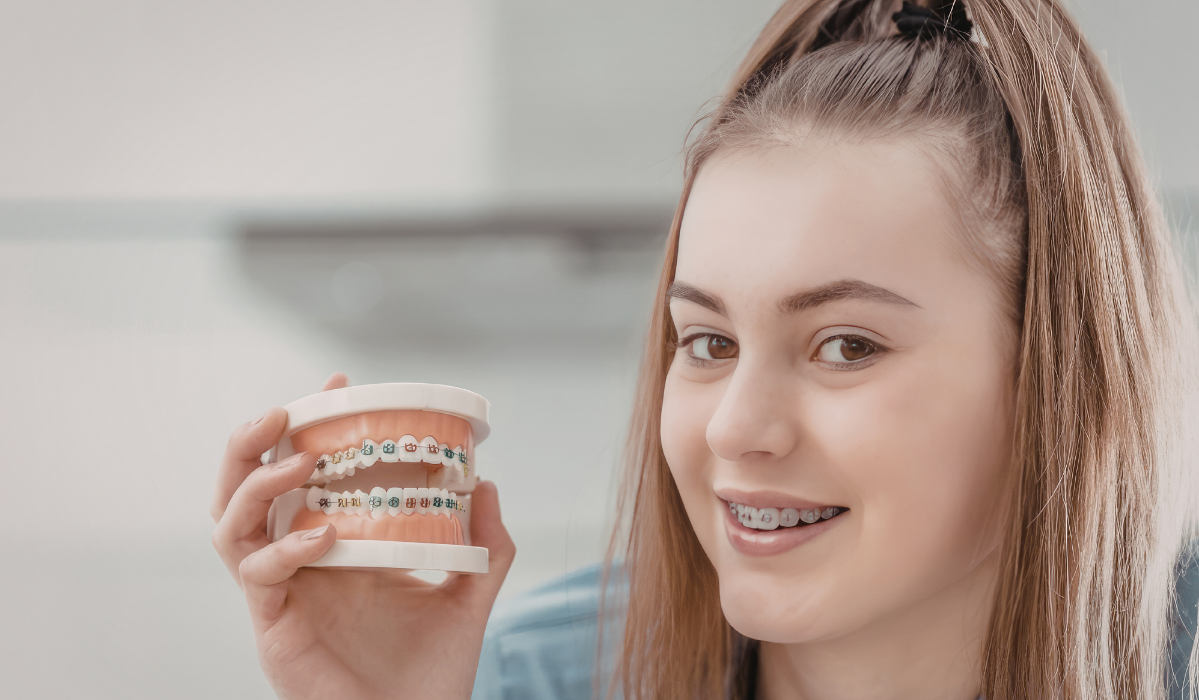
When most people picture braces, they imagine a mouth full of metal. But modern orthodontic treatment offers more variety than ever before. The brackets used in braces today come in several different systems, each with its own design, material, and advantages. Understanding the differences can help you have a more informed conversation with your dental team and feel confident going into treatment.
At Dunnville Dentistry, we believe every patient in Dunnville deserves to understand exactly what is going into their mouth and why. Here is a clear breakdown of the most common bracket systems, how they affect your treatment, and what keeps them attached to your teeth throughout the process.
What Are Braces Brackets?
Brackets are the small attachments bonded directly to the surface of each tooth. They are the part of braces that most people notice first. Each bracket holds a slot through which the archwire runs. The wire applies gentle, continuous pressure to guide teeth into their correct positions over time.
The bracket itself is a key part of how braces work. Its size, shape, and material all influence how efficiently teeth move, how comfortable treatment feels day to day, and how easy the braces are to keep clean throughout the process.
Metal Brackets: The Reliable Standard
Metal brackets are the most traditional and widely used option in braces treatment. They are made from high-grade stainless steel and are known for being durable, precise, and cost-effective.
One of the biggest advantages of metal brackets is their strength. They handle complex tooth movements well and are less likely to chip or crack compared to other materials. For patients with significant crowding, bite issues, or rotation corrections needed, metal brackets give the orthodontic team the greatest degree of control over tooth movement.
Metal braces are also the most affordable bracket system, which makes them a practical choice for families and younger patients. Many teens enjoy personalizing their treatment by choosing coloured elastics (the small rubber bands that hold the wire in place) at each adjustment appointment.
The main drawback is visibility. Metal brackets are the most noticeable of all the options. For patients who are self-conscious about the appearance of braces during treatment, other systems may be worth exploring.
Ceramic Brackets: A Less Visible Option
Ceramic brackets function in essentially the same way as metal brackets, but they are made from a tooth-coloured or clear ceramic material. This makes them far less visible against the natural colour of the teeth, which is why they are a popular choice among adult patients and image-conscious teens.
The aesthetic advantage of ceramic braces is significant. From a conversational distance, they blend into the smile much more naturally than metal. Many patients feel more comfortable smiling and speaking in professional or social settings while wearing ceramic brackets.
There are a few trade-offs to be aware of. Ceramic brackets are more brittle than metal and can chip under heavy biting pressure. They also tend to be slightly larger than metal brackets, which some patients find less comfortable against the lips and cheeks in the early weeks of treatment.
Staining is another consideration. The brackets themselves are stain-resistant, but the elastic ties that hold the wire in place can discolour over time, particularly with regular consumption of coffee, tea, red wine, or certain foods. Switching to clear or white elastic ties at adjustments helps manage this.
Ceramic braces are generally priced higher than metal brackets. Your dental team at Dunnville Dentistry can walk you through whether ceramic brackets are suitable for your specific case and lifestyle.
Self-Ligating Brackets: A Different Approach to Braces
Self-ligating brackets represent a notable shift in how braces work mechanically. Traditional brackets (both metal and ceramic) use elastic ties or small metal ligatures to hold the archwire in the bracket slot. Self-ligating brackets use a built-in clip or door mechanism instead, which holds the wire without the need for ties.
This design change has a few meaningful effects on treatment.
First, there is less friction between the wire and the bracket. Without elastic ties pressing the wire against the slot, the wire can slide more freely as teeth move. Some studies suggest this can support more efficient tooth movement in certain cases, though results vary depending on the complexity of the treatment.
Second, self-ligating braces tend to require fewer adjustment appointments. Because the system relies less on tightening ties and more on the wire’s natural properties, visits are sometimes spaced further apart.
Third, many patients report that self-ligating braces feel more comfortable, particularly in the early stages of treatment. The reduced friction and lighter forces used in some self-ligating systems can mean less soreness after adjustments.
Self-ligating brackets are available in both metal and clear (ceramic) versions, giving patients the option to combine the mechanical benefits of the system with a less visible appearance.
How Bracket Design Affects Treatment Efficiency and Comfort
The bracket system your dental team selects is not purely an aesthetic choice. Bracket design directly influences how efficiently your braces move your teeth and how comfortable the process feels day to day.
Slot size is one important factor. The slot in each bracket that holds the archwire comes in different dimensions. Smaller slots allow for lighter, more flexible wires in the early stages of treatment, which can be gentler on the teeth. Larger slots provide more control as treatment progresses and more precise movements are needed.
Bracket profile (how much the bracket sticks out from the tooth surface) also matters for comfort. Lower-profile brackets sit closer to the tooth and tend to cause less irritation to the inner lips and cheeks. This is especially relevant in the first few weeks of wearing braces, when the soft tissues inside the mouth are still adjusting.
Prescription is another variable built into bracket design. Each bracket is manufactured with a specific angulation and torque built in, which helps guide teeth into their ideal positions as the wire works through the system. A well-matched bracket prescription reduces the need for additional wire bending and can contribute to a more efficient overall treatment.
The Bracket Bonding Process: What Makes Braces Stay Attached
One of the most common questions patients have before starting treatment is how braces actually stay on the teeth. The answer is a carefully controlled bonding process using dental adhesive.
Here is how it works step by step.
The tooth surface is cleaned and dried thoroughly before bonding begins. A mild etching solution is applied to each tooth to create a slightly rough surface texture. This texture gives the adhesive something to grip onto at a microscopic level.
A bonding primer is then applied, followed by the dental adhesive (a composite resin material). The bracket is pressed firmly into place on the adhesive, and the position is adjusted carefully to ensure proper alignment. A curing light is then used to harden the adhesive in a matter of seconds.
The result is a bond strong enough to withstand the forces of chewing, speaking, and the pressure applied by the braces wire throughout treatment, yet designed to release cleanly when the time comes to remove the brackets at the end of treatment.
It is worth noting that while the bond is strong, it is not indestructible. Biting into very hard or sticky foods can dislodge a bracket. If a bracket comes loose during treatment, contact Dunnville Dentistry promptly so it can be rebonded before it affects your treatment progress.
Which Bracket System Is Right for You?
There is no single answer that applies to every patient. The right bracket system depends on the complexity of your case, your lifestyle, your budget, and your personal preferences around aesthetics and comfort.
Some cases genuinely require the precision and durability of metal brackets. Others are well-suited to ceramic or self-ligating options. In many situations, two different bracket types could achieve comparable results, and the choice comes down to what matters most to the patient.
The best way to find out which system suits your needs is to book a consultation with your dental team. At Dunnville Dentistry in Dunnville, we take the time to review each patient’s individual situation and explain the options clearly before any treatment begins.
Frequently Asked Questions About Braces Brackets
Do brackets ever fall off during treatment? It does happen occasionally, usually after biting into something hard or sticky. A loose bracket is not an emergency, but it should be addressed promptly. Contact the office to arrange a rebonding appointment as soon as possible.
Are ceramic brackets as effective as metal? For most cases, yes. Ceramic brackets move teeth using the same mechanical principles as metal brackets. The main differences are in durability, visibility, and cost, not in the fundamental effectiveness of the treatment.
Can I switch bracket types partway through treatment? In some cases, yes. Patients sometimes switch from metal to ceramic brackets for aesthetic reasons mid-treatment. Whether this is advisable depends on where you are in the treatment timeline. Discuss it with your dental team before making any changes.
How do I clean around brackets properly? Use a soft-bristled toothbrush and brush at a 45-degree angle both above and below each bracket. An interdental brush is helpful for getting between the bracket and the gumline. Floss threaders or orthodontic floss make it easier to clean between teeth while braces are in place.
How long does the bonding appointment take? Bonding all the brackets for a full set of braces typically takes between one and two hours. The process is straightforward and painless, though your mouth may feel a little full and unfamiliar for the first day or two.
If you are considering braces and want to understand which bracket system is the right fit for you, the team at Dentistry Dunnville is here to help. Give us a call at 905-774-7608 or visit us at 105 Lock Street E, Dunnville, ON to book your consultation.
0 Comments